The land and the people
Visiting Page and the Navajo Nation
How Page, Arizona relates to the Navajo Nation: the words Diné and Dinétah, how the land is governed, and how to be a considerate visitor.
Reserve your seat for dinner and dance ↗Quick answer
The Navajo Nation is the largest Indian reservation in the United States, and Page was founded in 1957 on a site obtained in a land exchange with it. Diné is the Navajo word for the people, and Dinétah is the traditional homeland. The Navajo Nation observes daylight saving time on its Arizona land, and its parks have their own rules, so check them before you visit.
The Navajo Nation in brief
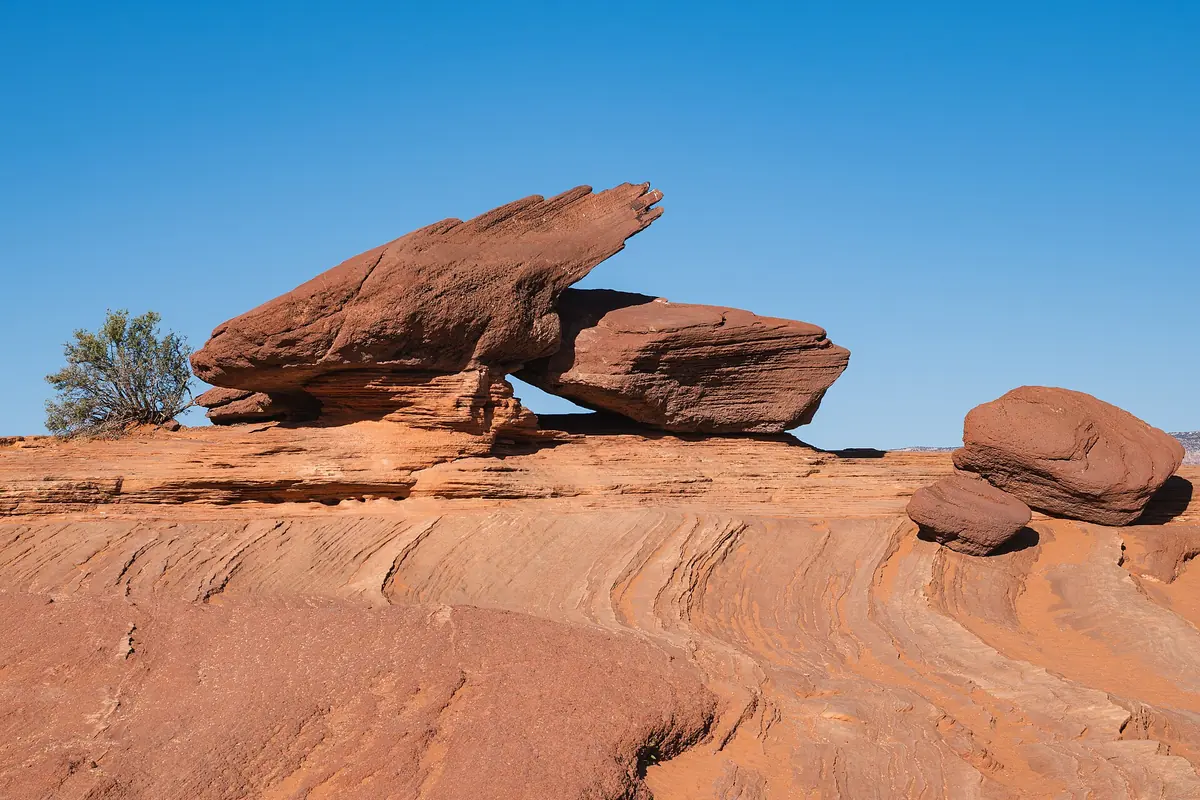
The Navajo Nation, also known as Navajoland, is a Native American reservation of Navajo people in the United States. It occupies portions of northeastern Arizona, northwestern New Mexico and southeastern Utah, and its seat of government is Window Rock, Arizona. At roughly 17,544,500 acres, it is the largest Indian reservation in the United States, exceeding the size of ten U.S. states.
Diné and Dinétah
In the Navajo language, Diné means the people. Among the Navajo populace, both Navajo and Diné are used as names, and the Tribal Council has twice rejected a proposal to change the Nation's designation. Dinétah, meaning among the people, is the traditional homeland of the Diné, in the Southwest. The Page show's organiser describes its setting as surrounded by the sacred lands of Diné Bikéyah, and this guide follows the way the organiser and the Nation use these words.
How Page fits in
Page was founded in 1957 as a housing community for dam workers, on a 17-square-mile site obtained in a land exchange with the Navajo Nation. It sits on Manson Mesa at an elevation of 4,300 feet. In the 2020 census, Navajo was the most reported ancestry in the city, at 40.8 percent. In 1997, Antelope Canyon was opened to tourism on Navajo land adjacent to Page, which increased tourism to the town.
Rules for Navajo parks
Navajo Nation Parks and Recreation oversees the Lake Powell Navajo Tribal Park, among others. Its site asks visitors to be aware of Navajo Nation laws and says littering, camping, rock climbing, drones and cremation are strictly prohibited inside the tribal park lands, and that dogs are prohibited at all park locations. It asks visitors not to desecrate Navajo lands. If you plan to leave Page for any tribal park, read the department's pages before you go.
A watch-the-clock tip
The Navajo Nation observes daylight saving time on its Arizona land as well as on its Utah and New Mexico lands. The rest of Arizona does not observe it, apart from the Hopi Reservation, which is an enclave inside the Navajo Nation's Arizona land and also does not observe it. For part of the year the clocks on the two sides of a boundary can differ by an hour, so confirm the time for any booking or visit on Navajo land.
Being a considerate guest
A few habits help. Use the names people use for themselves, and follow the organiser's wording where you quote it. Ask before photographing a person, and keep flash off at performances. Do not touch regalia or instruments unless invited. Keep to marked trails and park rules on tribal land. Listen to the people who tell the stories, because storytelling at the Page show is presented as preserving the rich history and legacy of ancestors, and it is best received with attention.
Who this isn't for
This is a short orientation and not a history of the Navajo people, and it cannot speak for them. It cannot say what a dance, a piece of regalia or a story means to one family. For that, go to the Navajo Nation's own pages and museums, and to the people on stage. If you came for a quick answer about booking, the guide to the dinner show covers the ticket, the arrival and the practical details.
Read next: Page, AZ Native American dinner show
Frequently asked questions
Is Page on the Navajo Nation?
Page was built on a site obtained in a land exchange with the Navajo Nation. Nearby Antelope Canyon is on Navajo land.
What does Diné mean?
In the Navajo language, Diné means the people. It is also a traditional name for the Navajo.
Does the Navajo Nation change its clocks?
Yes, it observes daylight saving time on its Arizona land, while the rest of Arizona does not.
Sources